
Ghana Water Ordered to Pay $235 Million Over Collapsed Teshie Desalination Deal
An international arbitration tribunal has ordered Ghana Water Limited to pay $235 million to the Spanish-owned operator of the Teshie-Nungua desalination plant, deepening a financial dispute that has left the facility shut and thousands of residents without reliable water since October 2025.
- Published in News.
- 4 minute read.
- 7 readers have viewed this story.
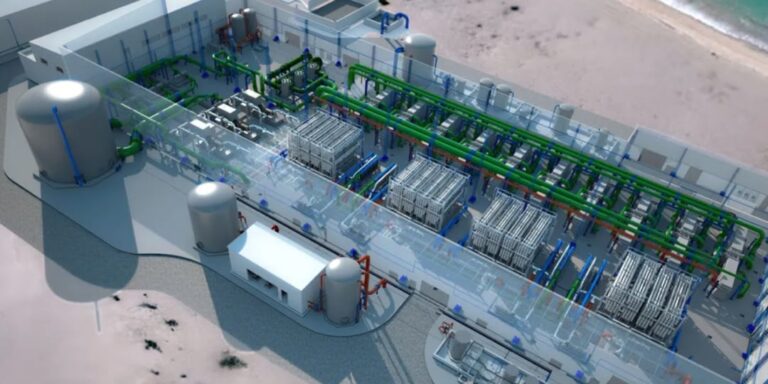
Ghana's state water utility has been handed a $235 million bill after losing an international arbitration battle over a desalination plant that has sat idle for nearly a year. The International Chamber of Commerce arbitration tribunal issued two final awards on September 17 in a dispute between Ghana Water Limited and Befesa Desalination Developments Ghana Limited, the company that runs the Teshie-Nungua desalination plant. Spanish infrastructure group Cox, which holds a 95 percent stake in the project company, disclosed the outcome publicly on September 21.
According to Cox, the award, calculated net of taxes, covers payments tied to the termination of the water purchase agreement between the two parties. Interest will accumulate on the sum from April 1, 2026 until it is paid in full. The ruling also drags the Ghanaian state directly into the matter. A state guarantee attached to the original project means the Republic of Ghana has been found liable for the same sums, so government coffers could ultimately be tapped if Ghana Water cannot cover the payment itself. The tribunal was careful to note that Befesa cannot collect the award twice over, once from the utility and again from the state.
Ghana Water did not walk away empty handed on every front. The tribunal threw out most of the utility's counterclaims against Befesa, among them a bid for $144.5 million, and ordered Ghana Water to cover a portion of Befesa's legal costs from the proceedings.
The roots of the dispute trace back to a $126 million facility commissioned in 2015 under a 25 year build, own, operate and transfer agreement. At full capacity, the plant was engineered to turn out 60,000 cubic metres of treated water daily, enough to serve as many as 500,000 people across Teshie, Nungua, Spintex, Baatsona, Sakumono and parts of La and Lashibi. The project carried heavyweight backing from the outset. In 2012, the World Bank's Multilateral Investment Guarantee Agency issued guarantees worth $179.2 million to support it, and the original ownership group included Abengoa Water Investments Ghana, Daye Water Investment and local firm Hydrocol. Cox entered the picture in 2023, buying up the assets of the struggling Spanish engineering company Abengoa and inheriting majority control of the Ghanaian project company in the process.

What eventually broke the arrangement was a widening gap between what Ghana Water paid for the treated water and what regulators allowed it to charge consumers. Reports indicate the utility was buying desalinated water at roughly GH¢6.75 per unit while capped by an approved tariff of about GH¢1.47 per unit for resale, a shortfall regulators had tried to offset through a PURC approved annual average of GH¢170.42 million for capacity and operating costs across the 2022 to 2025 tariff period. The math did not hold. Ghana Water eventually stopped making payments and pushed to renegotiate the contract, and by October 2025 it had shut the plant down entirely, citing unresolved contractual disagreements and maintenance concerns. That closure has left households and businesses across the affected communities leaning on water tankers and boreholes for months, a gap the arbitration ruling does nothing to close on its own.
The financial stakes prompted intervention from the top of government well before the arbitration outcome landed. In February 2026, President John Mahama directed the Finance Minister, the Attorney General and Ghana Water to sit down with the plant's shareholders and work toward a resolution that could get the facility running again. Ghana Water's Managing Director, Adam Mutawakilu, said at the time that talks had already started and more negotiation was expected.
Cox, for its part, has urged caution in reading too much into the headline figure. The company says the $235 million represents the gross amount recognized within the project's financing structure rather than cash it will immediately pocket, with the real financial impact hinging on how much is actually recovered, the claims of lenders and other third parties, and how the award is treated on the books. Cox added that settlement talks with Ghana Water are ongoing and are proceeding without prejudice to the rights it has secured through the arbitration awards.
The awards are described as final and binding, though they remain open to whatever legal avenues exist for challenging or enforcing international arbitration decisions. In the paperwork tied to the awards, Ghana Water is referred to by its former corporate name, Ghana Water Company Limited. For now, the underlying problem, a shuttered plant and communities still waiting on the reliable supply it was built to deliver, remains unresolved. Settling the arbitration bill will not by itself restart production. That will require Accra to work out a commercially viable operating arrangement that protects public finances while getting affordable water flowing again to the communities that lost it.
Comments
Join the conversation.
Have an account? Sign in to skip entering your details.
No approved comments yet.