
Americans vote in midterms that could end Republican control of Congress
Voters across the United States chose a new Congress on Tuesday in the first national test of Donald Trump's second term. Democrats need three House gains and a net four Senate seats to take control.
- Published in News.
- 4 minute read.
- 2 readers have viewed this story.

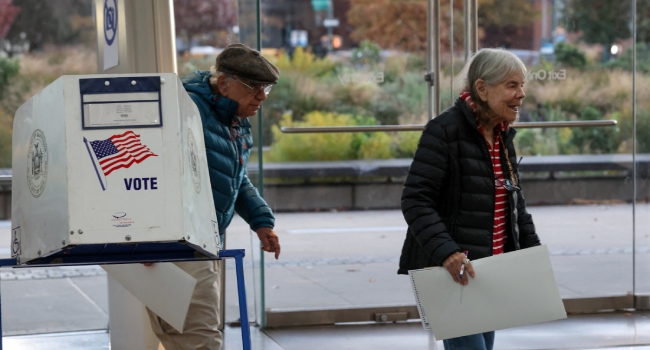
Americans voted on Tuesday in midterm elections that could hand Democrats control of Congress and deliver the first significant check on President Donald Trump's second term.
Democrats need only three House gains and a net four Senate seats to wrest both chambers from Republican hands. All 435 House seats, 35 of the 100 Senate seats and governorships in 36 states are on the ballot.
Decision Desk HQ's final forecast projected 241 House seats for Democrats against 194 for Republicans, with a narrower 52-48 Democratic Senate majority. Republicans currently hold the Senate 53-47.
Trump signalled he could simply defy Democrats if he loses control of Congress. "I veto everything," he told a podcast on Monday, although he said he might strike deals with them eventually.
The president made his final appeal at Washington's Reflecting Pool on Monday. He barely touched on the economy and spent most of the speech discussing the troubled renovation of the site.
"This is the last day before the midterm elections, the most important midterm I believe in our lifetime," he said, 26 minutes into the speech.
Senate Democratic leader Chuck Schumer branded the address a "pathetic closing message".
The cost of living has dominated the campaign. Diesel stood at $3.75 per gallon before the war with Iran began in February and reportedly climbed to $6.52 in September.
Inflation has risen from three per cent when Trump took office to 3.7 per cent. Economists estimate it would be lower without his sweeping global tariffs.
Pre-election polls put Trump's approval rating at about 38 per cent, while other reporting places it near the low 30s. Only 29 per cent of voters viewed the Democratic Party favourably.
Stephen Hawkins, global director of research at polling organisation More in Common, said several states once regarded as Republican strongholds now offered Democrats competitive openings. He named Texas, Ohio and Kansas among them.
Carrie Dann, managing editor of the Cook Political Report, said Republican spending in Kansas, particularly on the Senate race, had exceeded what the party first anticipated. She read that as a sign Republicans were playing defence.
Democratic strategist Mary Anne Marsh said the cost of living and the war with Iran were the central issues shaping the vote.
In the suburbs of Atlanta, retired teacher Jane Callum, 77, canvassed for Senator Jon Ossoff. "I really feel an obligation to do everything that I possibly can to change the direction that our country is going in now, and put it more on the path to democracy and away from autocracy," she said.
Voters interviewed in Iowa cited rising fuel, grocery and fertiliser costs, alongside the war, as reasons for reconsidering Republican support. Some Republican voters have voiced unhappiness with the president's handling of the economy and foreign policy without moving towards Democrats.
Texas military veteran Yvonne Clouser remained confident. "We're going to win. As a matter of fact, we've probably already won," she told AFP.
Republicans insist Trump's tax cuts and immigration crackdown will benefit Americans, and they portray Democratic candidates as left-wing radicals.
Democrats must also defend Michigan, where Congresswoman Haley Stevens endorsed Republican Mike Rogers instead of Democratic nominee Abdul El-Sayed. Losing the seat would raise the number of Democratic gains needed elsewhere to five.
A Republican loss in the House would let Democrats stall Trump's legislative agenda and open sweeping investigations into his administration. A Senate defeat would also threaten his ability to appoint Supreme Court justices and senior officials.
Trump, who tried to overturn his 2020 defeat, has repeatedly alleged widespread voter fraud and accused Democrats of cheating without evidence. The Justice Department, led by a close Trump ally, sued to potentially block certification of Alaska's Senate race if Republican incumbent Dan Sullivan narrowly loses, although a court ruled against the effort on the eve of the election.
The Supreme Court on Monday rejected an emergency bid to force California to set aside the mail-in ballots of more than 20,000 people on the grounds that they may not be American citizens.
More than 57 million Americans had voted early before Tuesday. The campaign has drawn more than $11 billion in political advertising, and Elon Musk has poured hundreds of millions of dollars into Republican efforts.
The results will also shape the 2028 presidential race, as Democrats test their strength in rural areas and traditionally Republican states. Trump will watch the returns at the White House on Tuesday night.
Comments
Join the conversation.
Have an account? Sign in to skip entering your details.
No approved comments yet.