
Yemenis Flee Across the "Gate of Tears" as Saudi-Houthi Fighting Escalates
Thousands of Yemenis are crossing the Bab el-Mandeb strait to escape intensifying fighting between Saudi Arabia and Iran-backed Houthi forces, as the widening conflict rattles global oil markets and pushes President Trump closer to a decision on renewed strikes against Iran.
- Published in News.
- 4 minute read.
- 3 readers have viewed this story.
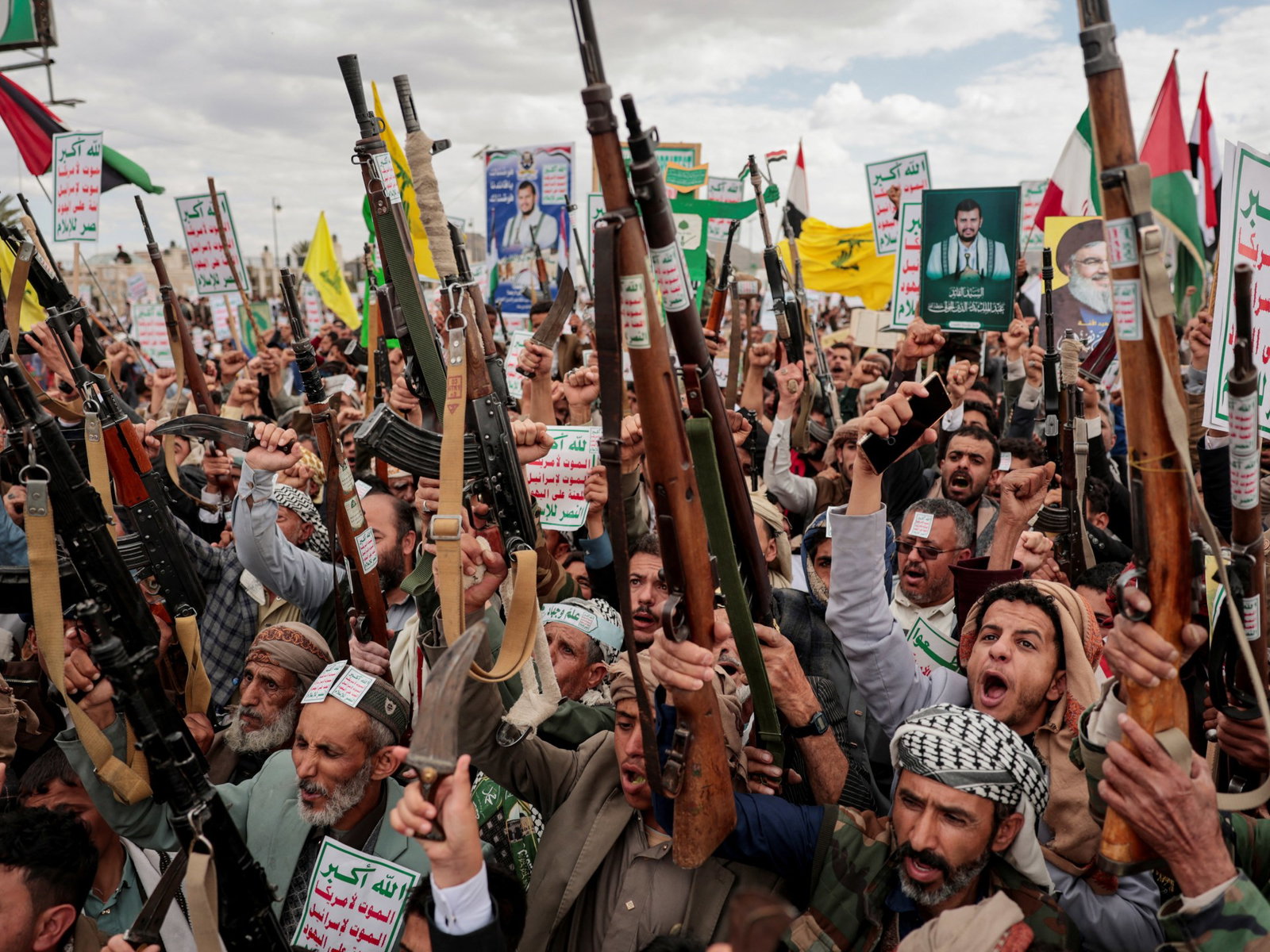

Thousands of Yemenis are fleeing across the Bab el-Mandeb, the narrow strait whose name in Arabic means Gate of Tears, as fighting between Saudi Arabia and Yemen's Iran backed Houthis intensifies and threatens to choke off one of the world's key oil routes.
Saudi forces and the Houthis traded fresh strikes across their shared border on Thursday, with Houthi controlled television reporting Saudi airstrikes in Hajjah province near the Red Sea coast and in the area around Taiz further inland. Saudi Arabia's civil defense agency confirmed the first death Riyadh has announced since the fighting escalated last week, a Yemeni resident of Taif killed by falling debris from a drone intercepted over the city. More than 80 others have been wounded in the string of attacks so far.
The Houthis, who seized control of Yemen's entire Red Sea coastline in a lightning advance last week, claim the Saudi Air Force has carried out hundreds of airstrikes in recent days. On Wednesday, the group said it had shot down a Saudi F-15 fighter jet. Houthi leader Abdul Malik al-Houthi appeared on television seated with a traditional dagger tucked into his belt, declaring that the group wants Saudi Arabia to end its blockade and occupation and demanding an end to what he called Saudi aggression against Yemen. Behind him, slogans on the wall read "Death to America, death to Israel," language that has become a fixture of Houthi political messaging since the group entered the wider regional conflict.
The human cost of the fighting is mounting quickly. The International Organization for Migration says more than 100,000 Yemenis have been displaced by the latest violence, the overwhelming majority still inside the country. Others have chosen to risk the sea crossing entirely. In Djibouti, on the African shore of the Red Sea, 50 year old Wahida Omer described reaching land after fleeing her village of Dhubab by small boat once Houthi forces swept into the area, leaving behind a husband she has heard nothing from since, uncertain whether he is alive, dead, or in Houthi custody. She told interviewers filming for the International Organization for Migration that the sea crossing was frightening and difficult, and that everyone aboard the boat cried the entire way, arriving with nothing left to eat.
The widening conflict is rattling energy markets already strained by the broader war between the United States and Iran. The spread of fighting into Yemen and Saudi Arabia threatens the main Red Sea alternative route for Gulf oil exports at a moment when traffic through the Strait of Hormuz remains severely restricted. Iran's Revolutionary Guards Navy says it hit a Togo flagged oil tanker attempting what it called an illegal passage through the strait, setting the vessel ablaze and bringing it to a halt, according to Iranian state media. Iran maintains the strait is closed and will stay shut until Washington lifts its naval blockade of Iranian ports, and Tehran is reportedly seeking an arrangement with neighboring Gulf states that would let it collect fees from ships still attempting the passage.
Global crude prices dipped slightly on Thursday but remain above 100 dollars a barrel after touching their highest levels since May, while the average US retail diesel price hit a record high, falling just short of 6.40 dollars a gallon.
President Donald Trump has so far declined Saudi requests for military support against the Houthis, a group that had reached a ceasefire with the United States last year following a two month American bombing campaign. Trump has previously threatened major new strikes that never materialized, but on Thursday he suggested a turning point may be near, telling Axios in an interview that he faces a big decision on whether to go in and annihilate Iran, adding that anything could happen. The remarks come as Trump weighs the political risk of resuming direct conflict with Tehran ahead of November's midterm elections, with his party already facing headwinds tied to rising energy costs since the US and Israeli strikes on Iran in February.
Diplomacy has largely stalled in the meantime. Washington and Tehran have not held negotiations since an interim agreement reached in June collapsed within weeks, though the war is expected to come up for discussion at the United Nations General Assembly next week, where the US State Department says an Iranian delegation will be permitted to attend.
Comments
Join the conversation.
Have an account? Sign in to skip entering your details.
No approved comments yet.