
Nigeria's inflation slows to 14.06 per cent as monthly prices pick up
Nigeria's headline inflation eased to 14.06 per cent in October, but a faster monthly rise in prices and stubborn food costs suggest relief for households is still some way off.
- Published in News.
- 4 minute read.
- 8 readers have viewed this story.
Nigeria's headline inflation rate slowed to 14.06 per cent in October from 14.63 per cent in September, the National Bureau of Statistics said on Monday, offering relief to President Bola Tinubu before January's election.
The latest Consumer Price Index report puts the annual rate 4.91 percentage points below the 18.97 per cent recorded in October 2025. Inflation had hovered around 15 per cent for months, and the decline will be welcomed by an administration that faces voters in January as it seeks a final four-year term. Persistent price pressures have been a particular test for the president ahead of the vote.
Tinubu took office in 2023 and introduced a series of economic reforms, among them the removal of petrol subsidies and the devaluation of the currency, in an effort to lift growth and strengthen public finances. The changes also fuelled a cost-of-living crisis, with Nigerians contending with high prices for food, transport and energy.
Beneath the headline figure, the picture is less reassuring. Month-on-month inflation rose to 0.43 per cent in October from 0.06 per cent in September, meaning prices climbed faster during the month than in the one before. The Consumer Price Index itself edged up to 147.0 points from 146.4 points. Local press coverage of the report said this showed the annual rate was slowing without any real fall in the cost of living, and questioned whether the recent disinflationary trend can be sustained.
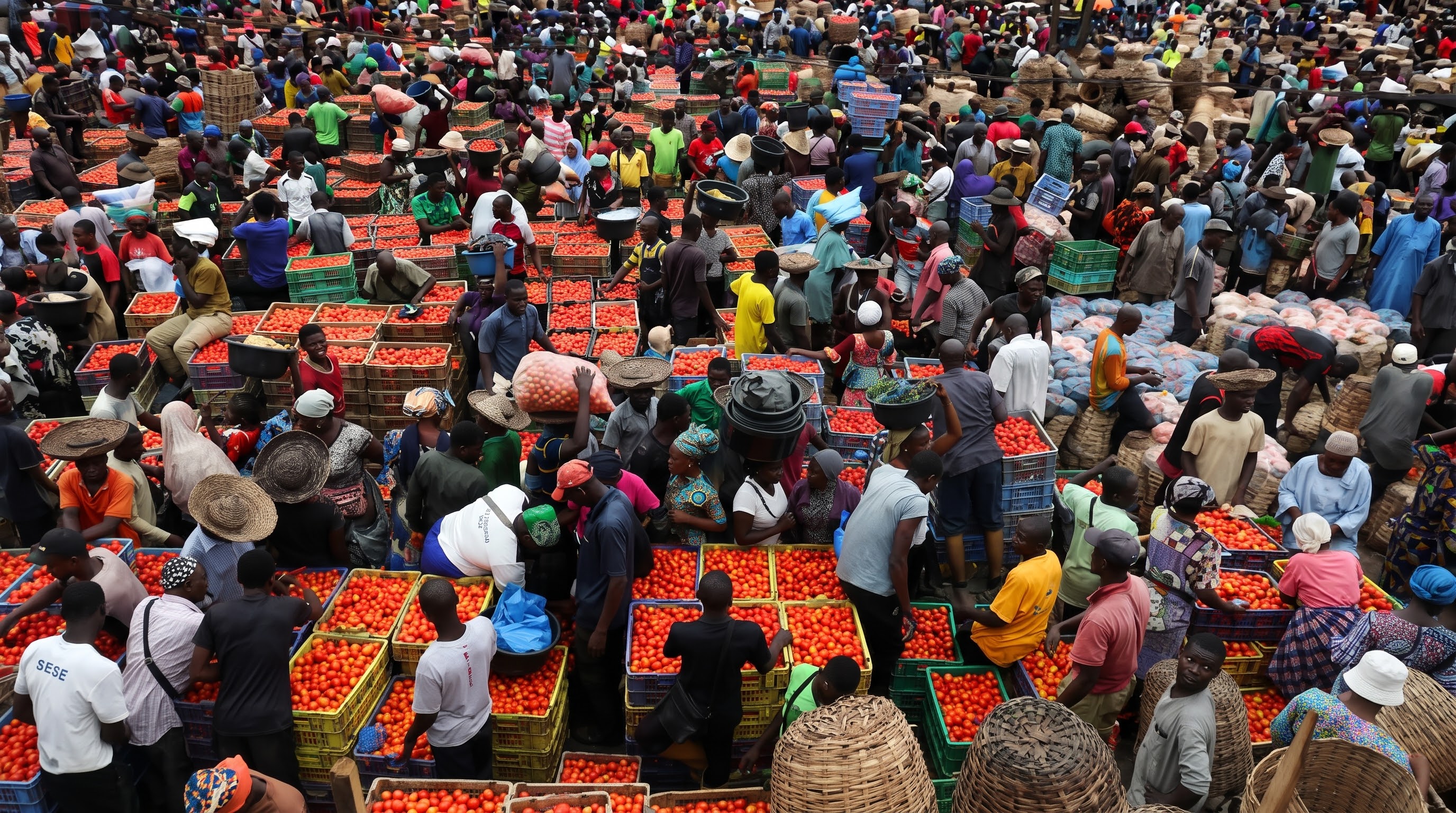
Food remains the main source of strain. Food inflation fell to 19.13 per cent year-on-year in October from 19.59 per cent in September, but it is still well above the headline rate and higher than the 16.30 per cent recorded a year earlier. Food prices dropped by 0.75 per cent on the month, compared with a fall of 1.55 per cent in September, a slower decline that points to weaker momentum in price reductions. The bureau linked the monthly movement to changes in the cost of items including vegetable oil, Titus sardines, green peas, frozen mackerel, croaker fish, locally produced rice, fresh catfish, beef tripe, palm oil and millet flour. The average annual food inflation rate for the 12 months to October stood at 15.98 per cent, down from 26.47 per cent a year earlier.
Food and non-alcoholic beverages were again the largest contributor to headline inflation, accounting for 5.63 percentage points of the annual rate. Restaurants and accommodation services added 1.82 percentage points and transportation 1.50 percentage points, while housing, water, electricity, gas and other fuels contributed 1.18 percentage points.
The average annual headline rate for the 12 months to October fell to 15.40 per cent from 26.05 per cent in the same period a year earlier. Core inflation, which strips out volatile agricultural produce and energy prices, offered a more encouraging reading. It declined to 10.78 per cent year-on-year from 21.25 per cent in October 2025, and fell on a monthly basis to minus 0.53 per cent from 1.11 per cent in September. Its 12-month average eased to 15.67 per cent from 25.07 per cent.
The state-level data shows wide gaps in what Nigerians are paying. Imo recorded the highest all-items inflation rate at 28.66 per cent, followed by Enugu at 22.81 per cent and Kaduna at 21.55 per cent. Taraba posted the lowest at 6.12 per cent, ahead of Sokoto at 6.68 per cent and Ekiti at 7.64 per cent.
The contrast was sharper still for food. Ondo recorded the highest food inflation rate at 31.74 per cent, with Lagos close behind at 31.43 per cent and Imo at 29.75 per cent. Nasarawa had the lowest at 3.70 per cent, followed by Bayelsa at 7.11 per cent and Kano at 7.13 per cent. Lagos nonetheless saw food inflation fall by 5.93 per cent on a monthly basis. On the month-on-month measure for all items, Bauchi, Borno and Yobe recorded the steepest increases at 11.23 per cent, 10.94 per cent and 9.93 per cent respectively.
Commentary on the figures noted a widening gap between improving inflation statistics and the daily experience of millions of households, particularly low-income earners stretched by the cost of food, transport, accommodation, healthcare and education.
Comments
Join the conversation.
Have an account? Sign in to skip entering your details.
No approved comments yet.