
Burnham backs Be Ready campaign as UK told to stockpile food
Andy Burnham has backed the Be Ready campaign, which asks households to hold nine litres of water per person and three days of food. Ministers link it to storms, cyber attacks and hostile states.
- Published in News.
- 5 minute read.
- 16 readers have viewed this story.
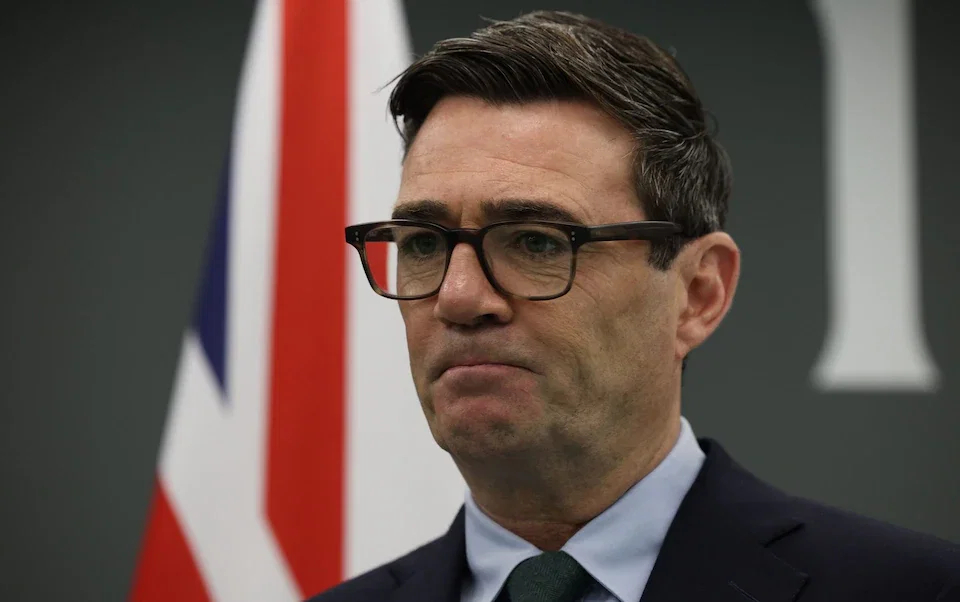
Prime Minister Andy Burnham urged households on Thursday to stockpile nine litres of water and three days of food per person as the government launched its Be Ready campaign.
Officials cite storms, cyber attacks and hostile state threats as the reasons for the guidance, which is designed to help homes cope with a weather, cyber or other serious emergency.
Mr Burnham said the campaign was about preparation rather than panic. "It's about just taking sensible measures to have enough in the house to tide you over should there be a difficult situation," he said.
The Cabinet Office checklist sets a drinking water ration of three litres per person per day, with more needed for cooking and washing. It also lists non-perishable food such as tinned meat and vegetables or dried fruit.
Torches with batteries, blankets, a first aid kit, a charged power bank, copies of important documents and cash in case payment systems collapse also feature. So do hand sanitiser, wet wipes, toiletries, pet food and supplies for babies.
The government suggests a battery or wind-up FM radio, which would be the best way to receive news and health and safety updates during a severe power cut.
Speaking at a wildfire resilience summit in Liverpool, Mr Burnham rejected the suggestion that the government had failed to prepare. "No, we're having the conversation with people about being better prepared because we're living in a world where unexpected events seem to be becoming more and more common," he said.
Mr Burnham noted that the UK was facing storms, adding "we feel for the people without power in Cornwall right now".
Security minister Dan Jarvis told people that "those who can follow this advice should follow this advice". He described the guidance as "simple steps to be ready for everyday emergencies" within a community-oriented effort "to improve our resilience as a nation".
Defence secretary Wes Streeting widened the warning to attacks by Russia or other hostile powers on everyday infrastructure, speaking at a new Rheinmetall tank gun barrel factory in Telford, West Midlands. "Terms like 'hybrid warfare' and 'grey zone threats' do not accurately capture or convey to the general public what I prefer to describe as 'state-sponsored terrorism'," he said.
Britons must also plan for cyber attacks that could knock out business payment systems or cause supply chains to collapse, Mr Streeting said.
"So in the face of those threats, which are not hypothetical but real, and not somewhere else but increasingly here, we have to step up and take seriously our national resilience as well as our national defence," he added.
Treasury minister James Murray told BBC Breakfast he had not yet followed the guidance, though he kept a stockpile of coffee. He pointed out that Ireland, France and the Netherlands had issued the same advice "for quite a long time", then added "I'm not going to pretend I've followed all that advice myself yet."
Conservative leader Kemi Badenoch said she was "stocked up for the week at any time". She noted that the previous Conservative government had issued similar advice on preparing for emergencies.
Her concern lay elsewhere, because it "doesn't look like" the government "are explaining what the risks we are under are, and what they are doing about the big things", she said.
At Labour's conference in September, Housing Secretary Angela Rayner joked that her emergency box would hold "a bottle of Sauvignon Blanc" alongside baked beans and custard.
Asked whether he agreed, Mr Burnham told Matt Chorley on Radio 5 Live, "Well, I'm not sure a bottle of wine is your best first port of call if you're in a slightly crisis situation, but it probably helps when you've done the hard work." His own cupboard offers a different stock. "I do like my beans, so I have plenty of those in the cupboard, and soup," he said.
Mr Burnham also named one non-negotiable item. "As well as Twiglets, I'm not sure I can get by for too long without those," he said.
Ministers timed the launch to precede the winter storm season. Storm Goretti left tens of thousands of homes without power in the Midlands, the south-west and Wales in January, with winds reaching nearly 100mph.
Concern also surrounds a "super El-Nino", a global phenomenon that could make 2027 the hottest year ever recorded and disrupt global food supplies and energy systems.
The guidance emerged as 32 government websites were taken offline as a precaution after the discovery of a security vulnerability in the PHP programming language, which millions of websites use worldwide. The National Cyber Security Centre sent 50,000 alerts to affected organisations.
Spain and Portugal lost power for several hours in April 2025 in a cascading failure triggered by voltage instability in the network, affecting about 55 million people.
The Royal Navy has tracked Russian spy ships monitoring undersea pipelines and cables that link the UK to continental Europe, though an attack on them would represent a major escalation by Moscow. An explosives-laden drone was found beside a Ukrainian cargo plane at Germany's Leipzig airport in August, and a series of explosions and fires has struck defence facilities across Europe.
The National Audit Office warned last month that Britain's food supply chain faced growing risk from cyber attacks and the climate crisis, and said the Department for Environment, Food and Rural Affairs had not done enough in recent years to improve resilience. The chief executive of the Cold Chain Federation, which represents firms moving temperature-controlled foods, said Russian hackers "know that there are pinch points in the food supply system".
Britain has rarely run public information campaigns, with governments of both parties reluctant to face accusations of scaremongering. A 1980 campaign on surviving nuclear war, Protect and Survive, advised people to build a bomb shelter at home and keep enough food for 14 days.
The Be Ready campaign will be followed by an advertising drive on social media and radio.
Comments
Join the conversation.
Have an account? Sign in to skip entering your details.
No approved comments yet.