
Acumen Backs Nigerian Hibiscus Exporter AgroEknor
Acumen has announced an investment in AgroEknor, the Nigerian agribusiness that runs the hibiscus trade from smallholder farm to export. Chief executive Timi Oke said the deal validates the company's mission.
- Published in News.
- 5 minute read.
- 1 readers have viewed this story.
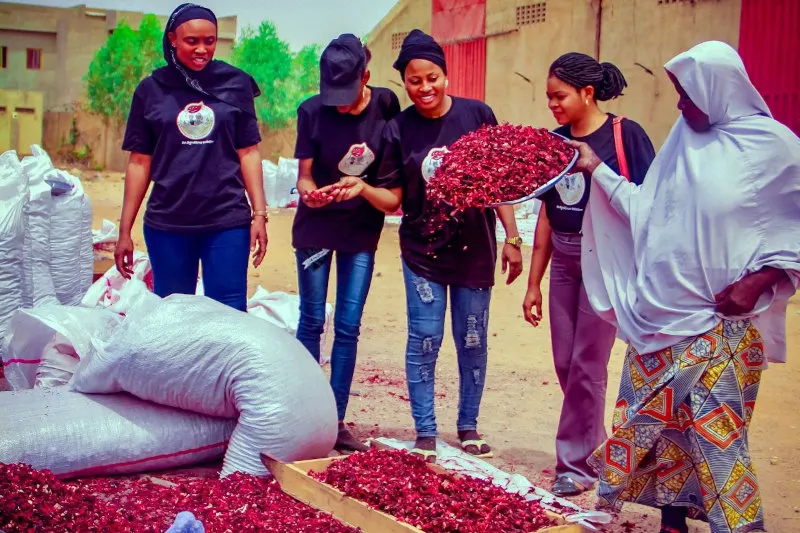
Acumen has announced an investment in AgroEknor, the Nigerian agribusiness that controls the hibiscus trade from smallholder farm to overseas buyer, in a deal that hands the 13-year-old exporter a new institutional backer.
The undisclosed terms were revealed in March 2026. AgroEknor works directly with smallholder farmers to grow hibiscus, which it processes and ships to customers in Mexico, the United States and China. Part of the harvest is turned into Madala, a cordial drink sold within Nigeria, which Acumen said creates extra value and income at home.
Acumen said the company's integrated model guarantees quality control and traceability while improving earnings in rural farming communities. It described the partnership as one designed to strengthen AgroEknor's growth trajectory and advance inclusive agricultural development in Nigeria.

Timi Oke, the company's co-founder and chief executive, said the investment endorsed what the business set out to do. "We are proud to welcome Acumen as a strategic partner in AgroEknor's next phase of growth. Their investment validates our mission to build a world-class agro-industrial company rooted in African ingenuity, farmer prosperity, and sustainable value-chain transformation," he said.
Babatunde Usman, an investment manager at Acumen, said the company fitted the firm's investment thesis. "AgroEknor exemplifies Acumen's investment thesis that sustainable business models can drive transformative social impact at scale," he said.
He added that by connecting smallholder farmers, particularly women, to premium global markets while providing climate-smart training and fair pricing, AgroEknor "is enabling smallholders to graduate from subsistence into commercially viable farming practices creating repeatable pathways to economic resilience."
AgroEknor was founded in 2013 by the brothers Timi and Ayo Oke together with Attah Anzaku. Oke said in 2022 that the team spent around 12 months researching which products were most viable for trade before settling on superfoods. "We then joined a few industry groups and began to engage potential partners and stakeholders to establish our credibility and build the business," he said at the time.
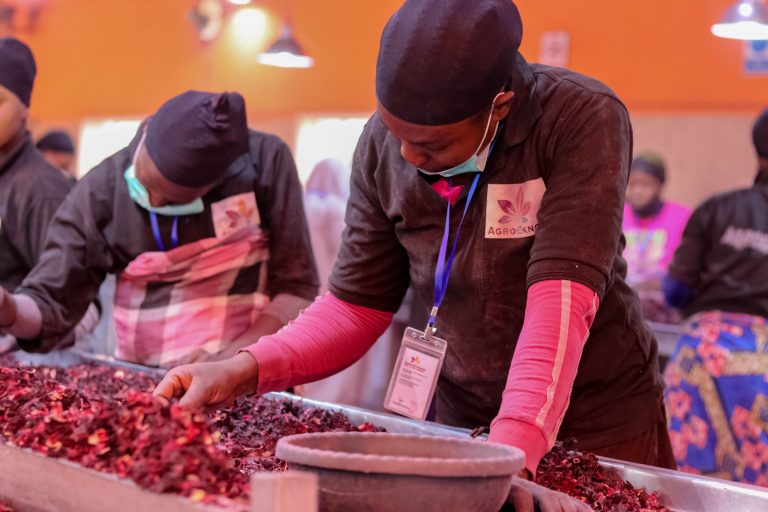
The breakthrough came with a Mexican buyer. Oke has said the founders were upfront that this was their first deal and gave the customer enough assurances to secure an order of 60 tonnes of dried hibiscus. The three co-founders used their own money to buy the crop from middlemen who had sourced it from small-scale farmers across Northern Nigeria.
"We successfully completed the order, delivering 60 tonnes of dried hibiscus to a satisfied customer, and that was the beginning of the long journey that has brought us to where we are today," he said.
Outside funding has arrived in stages. AgroEknor secured an undisclosed investment from Aruwa Capital Management, a growth equity and gender lens fund investing in Nigeria and Ghana, in November 2021. It has also received grants, among them an export stimulation facility from the Nigeria Export-Import Bank. By July 2022, Oke said, the company was already engaging investors for further funding to drive its tech-enabled solutions.
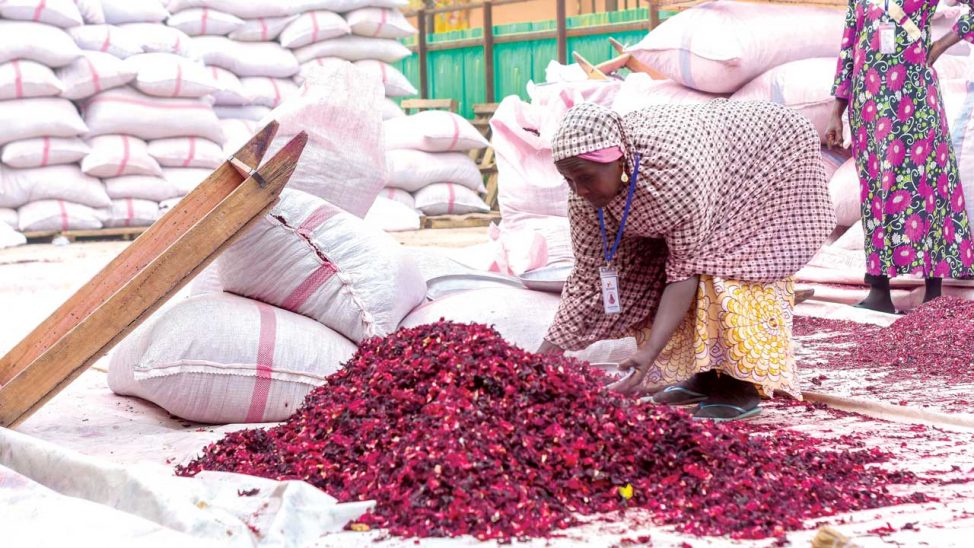
The company's own figures from that year show the scale it had reached. It said that over the previous five years it had equipped more than 5,000 smallholder farmers with farm inputs and exported more than 15,000 tonnes of agricultural products to clients across Asia, Europe, and North and South America. It reported 68 employees, a processing centre in Kano and a liaison office in Abuja. Its range then included dried hibiscus flower, ginger and sesame seeds.
AgroEknor said at the time that it was building scalable digital infrastructure through backward integration, an approach it credited with higher incomes for smallholders and less wastage along the supply chain.
Oke defended the model in 2022. "Through our end-to-end value chain involvement, we are able to enhance food security, extend shelf-life of agro commodities and ultimately improve palatability and export value of agricultural commodities," he said. He also pointed to Nigeria's position in the market. "Hibiscus, for example, is predicted to be one of the biggest global food trends in 2022 and Nigeria happens to be one of the largest growers in the world," he said.
On competition, he was direct. "The opportunity to transform Africa's agriculture sector is attracting more attention and drawing more players to the market but our focus on superfoods is our main differentiator. As most of our customers are based outside Nigeria, our competition is typically agribusinesses from other parts of the world where some of these superfoods are also grown," he said in 2022.
In a 2024 interview, Oke recalled securing his first agricultural trading deal through LinkedIn while still employed at a bank in the UK. He also discussed the booming market for hibiscus flowers, the lessons of working with smallholder farmers, breaking into the American market, and why organic waste management and storage offer major openings for agribusiness.
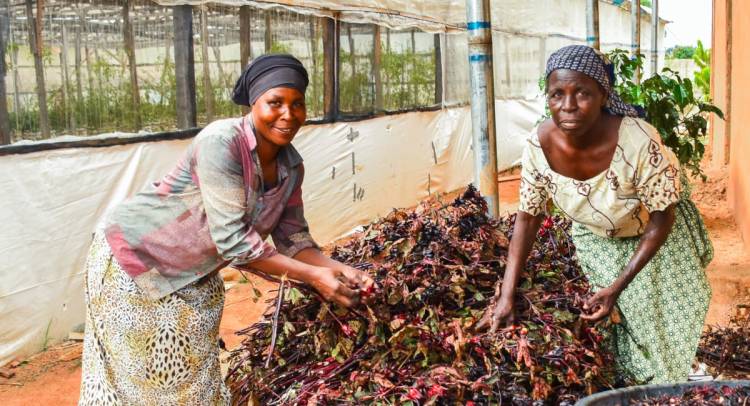
Oke has repeatedly linked the company's fortunes to those of the farmers who supply it. Speaking at the 115th anniversary of King's College Lagos, he said regions across Nigeria had suffered flooding, drought and rising temperatures, all with a profound effect on agricultural productivity. He urged decisive action to secure the country's food supply for future generations.
"Farmers, particularly smallholder farmers, must be given the tools and support they need to adapt to changing conditions," he said, adding that this should include investment in disaster risk management so farmers can prepare for and recover from extreme weather.
He described smallholders as the country's "foot soldiers" in the fight against food insecurity and said they need access to social protection and support from both the public and private sectors. He also called for investment in agricultural cooperatives and producer associations, which he said would let farming communities pool resources, reach scale and gain easier access to inputs, services and markets.
Comments
Join the conversation.
Have an account? Sign in to skip entering your details.
No approved comments yet.